Tarot and Jung
Symbols and systems · 3 min read · updated
Carl Gustav Jung (1875–1961), the Swiss psychiatrist, mentioned tarot only a few times, but his ideas became the main way people talk about it today. His archetypes, recurring figures of the human imagination, gave readers a way to see the Major Arcana as a map of the psyche, and his synchronicity, meaningful coincidence, gave them a way to explain why a card seems to fit. From the 1970s writers built a psychological tarot on these ideas, which now sits beside, and often replaces, the occult one.
- Carl Gustav Jung
- 1875–1961, Swiss psychiatrist
- Key ideas
- Archetypes, synchronicity, individuation
- What Jung said
- A few remarks, notably in a 1933 seminar
- Key book
- Jung and Tarot, Sallie Nichols, 1980
- Popular since
- The 1970s and 1980s
- Key term
What did Jung say about tarot?
Very little. In a seminar in 1933 he described the tarot cards as images descended from archetypes of transformation, and suggested they could be used, like the I Ching, to read the present moment.[1] He wrote about the I Ching at length and about astrology in his studies of synchronicity, but he never wrote a book or essay on tarot, never designed a deck, and as far as is known did not read the cards.
So a 'Jungian tarot' is not Jung's tarot. It is what later readers built from his psychology, and it should be judged on those terms.
What are archetypes in tarot?
For Jung an was an inborn pattern that shapes how people imagine the world, and which shows up in dreams, myths and stories everywhere: the mother, the father, the hero, the wise old man, the trickster, the shadow. Psychological readers see the Major Arcana as a gallery of them.
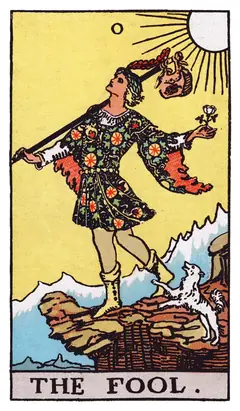
- The Fool is the innocent or the trickster, the self at the start of the journey.
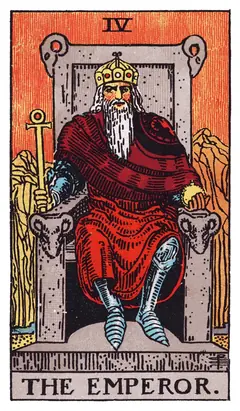
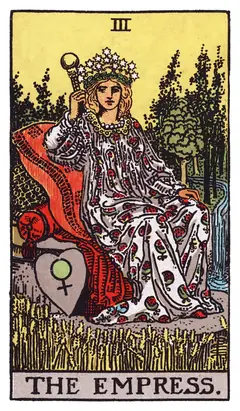
- The Empress and the Emperor are the great mother and the father.
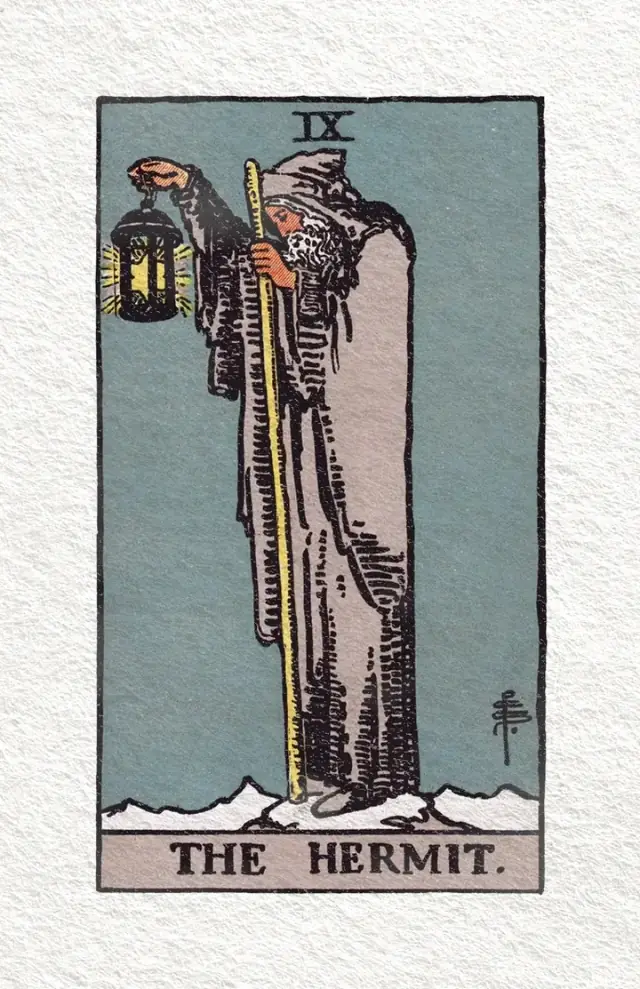
- The Hermit is the wise old man.
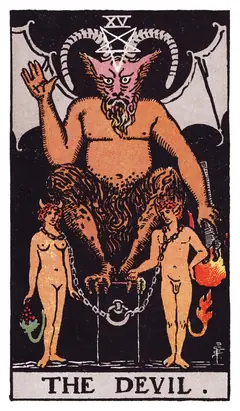
- The Devil is the shadow, the parts of ourselves we refuse to see.
- The World is the whole self, the end of what Jung called individuation.
Read in order, the trumps become a story of growth from birth to wholeness, the idea now called the Fool's Journey. Sallie Nichols's Jung and Tarot (1980) set it out in full, and books such as Rachel Pollack's Seventy-Eight Degrees of Wisdom (1980) made the psychological reading standard.[2]
What is synchronicity, and why do readers cite it?
was Jung's word for a meaningful coincidence with no causal link: his best-known example is a patient telling him a dream about a golden scarab while a similar beetle tapped at his window. He developed it with the physicist Wolfgang Pauli in a 1952 essay.[3] Readers use it to describe the feeling that the card drawn fits the question. It names that experience; it does not prove the card was chosen by anything other than the shuffle.
Psychological tarot and divination
The psychological approach reads the cards as a mirror: a set of strong images that help a person put a situation into words, notice what they feel and see the choices ahead. It sits alongside the older reading of tarot as rather than replacing it, and many readers, us included, use both.
Its trap is a reading that only says what you wanted to hear. Writing the reading down and coming back to it later keeps you honest with yourself. See Tarot journal.
Did the tarot makers know about archetypes?
No. The trumps were drawn in 15th-century Italy from the stock images of their time: Christian virtues, the planets, the Wheel of Fortune, the triumph of death and the Last Judgement. That they still work as archetypes says something about those images, which had already been repeated for centuries. It does not mean the makers meant them as a psychology. See History of tarot.