History of tarot
History · 5 min read · updated
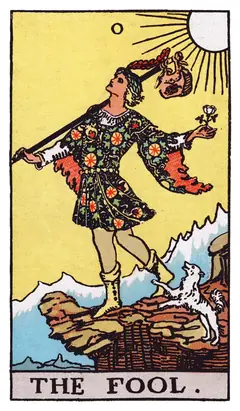
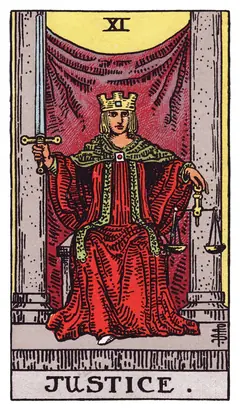
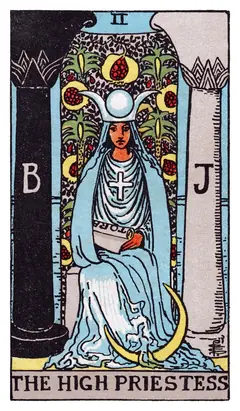
Tarot was invented in the courts of northern Italy around 1440 as a card game called . For three centuries it was only a game. It was first used for fortune-telling around 1750, turned into an occult system in Paris and London in the 19th century, and became the reading deck we know with the Rider–Waite–Smith tarot in 1909.
- Invented
- Northern Italy, c. 1420–1440
- First record
- Florence, 16 September 1440
- First name
- trionfi (triumphs)
- Name "tarocchi"
- from c. 1502–1505
- Oldest complete deck
- Sola Busca, Venice, 1491
- First divinatory meanings
- Bologna, c. 1750
- Egyptian origin claim
- 1781, unfounded
- Modern standard
- Rider–Waite–Smith, 1909
Short answer: who invented tarot?
Nobody knows the inventor's name. Tarot appeared in the princely courts of northern Italy, in Milan, Ferrara and Florence, in the first half of the 15th century. Someone added a fifth suit of picture cards, the trumps, to the ordinary four-suit pack, and the game of trionfi was born.[1] It did not come from ancient Egypt, from the Romani, or from a secret society. Those stories were invented much later; see Myths about tarot's origins.
Before tarot: playing cards reach Europe
Ordinary playing cards came first. They reached southern Europe in the 1370s, most likely through trade with the Mamluk sultanate of Egypt and Syria, whose cards had four suits: cups, coins, swords and polo sticks.[1] Italian cards kept the same four: cups, coins, swords and batons. Those are still the four suits of tarot.
Trionfi in the Italian courts
The earliest firm reference to tarot is in the diary of Giusto Giusti, a notary from Anghiari. On 16 September 1440 he wrote that he had given Sigismondo Malatesta, lord of Rimini, a pack of trionfi made in Florence, at a high price.[2] Two years later, in February 1442, the account books of the Este court in Ferrara record packs of trionfi made for the court.[1]
An earlier experiment shows the idea taking shape. Around 1418–1425 Duke Filippo Maria Visconti of Milan had a pack made with sixteen classical gods as extra cards, designed by his secretary Marziano da Tortona. No card survives, only Marziano's description.[2]
The oldest surviving tarot cards are hand-painted, gilded luxury packs made for the Visconti and Sforza dukes of Milan in the mid-15th century. Around fifteen such packs survive in pieces, none complete. The best-known set is divided between the Morgan Library in New York, the Accademia Carrara in Bergamo and the Colleoni family.[3] See Visconti-Sforza tarot.
The name
At first the cards were simply trionfi, "triumphs", possibly after the triumphal processions popular in Renaissance poetry. Around 1502–1505 a new word appears in Brescia and Ferrara: tarocchi, and in France tarots. Where the word comes from is unknown.[2] "Tarot" is the French form, which English borrowed.[1]
A game across Europe
Printing made tarot cheap. Woodcut decks spread from Italy to France and Switzerland, and by the 18th century tarot games were played from Paris to Vienna and Prague.[1]
One printed design became the standard of French card-makers: the pattern now called the Tarot de Marseille. Its earliest surviving example was made by Jean Noblet in Paris around 1650; the city of Marseille became its main centre in the 18th century, with makers like Nicolas Conver in 1760.[2] Its trumps, from Le Bateleur to Le Monde, and its order with Justice VIII and Strength XI are the ones most historical decks follow.
The game is still played. French Tarot is a national favourite in France, and Tarock games are played in Austria, Hungary and Slovenia.[1] See Tarot as a card game.
The oldest complete deck
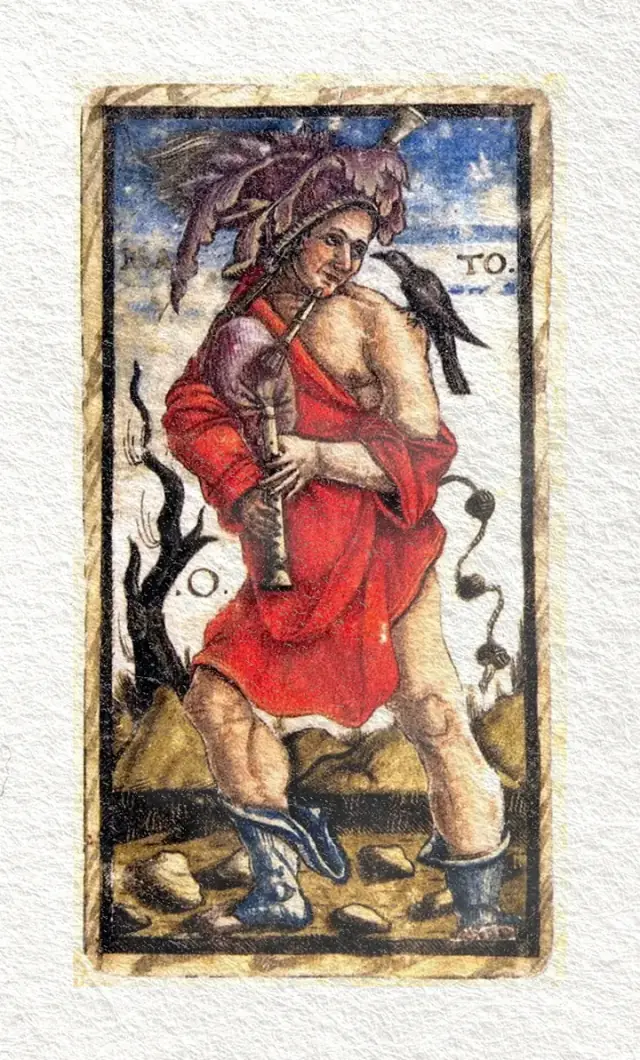
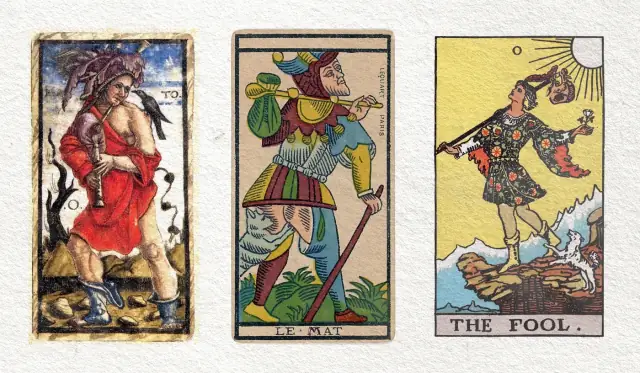
Most early decks have only pictures on the trumps and courts. The Sola Busca tarot, engraved and hand-coloured in Venice in 1491, is different: all 78 cards are illustrated, the numbered cards included. It is the oldest complete tarot deck that survives, and since 2009 it has belonged to the Pinacoteca di Brera in Milan.[4] More on the Sola Busca deck page.
From game to fortune-telling
For three centuries nobody is known to have used tarot to tell fortunes. The first evidence is a single sheet from Bologna, written around 1750, giving one-word meanings for 35 cards of the local deck.[5]
The big turn came in Paris. In 1781 Antoine Court de Gébelin published an essay in the eighth volume of his encyclopedia Le Monde primitif claiming that tarot was the surviving book of ancient Egyptian priests. In the same volume the Comte de Mellet called it the Book of Thoth.[5] Neither had any evidence; Egyptian hieroglyphs could not even be read until Champollion deciphered them in 1822, and they say nothing about tarot.
Within a few years a Parisian cartomancer, Etteilla, turned the theory into a business: books on reading tarot from 1783 and, in 1789, the first deck designed for divination.[5]
The occult tarot
In the 19th century French occultists built a whole system on the cards. Éliphas Lévi, in Dogme et rituel de la haute magie (1854–1856), linked the 22 trumps to the 22 letters of the Hebrew alphabet and to the Kabbalah.[5] Paul Christian popularised the word "arcana" for the cards; and published an occult tarot deck and book in 1889.[6]
In London, the Hermetic Order of the Golden Dawn, founded in 1888, connected every card with an element, planet, zodiac sign and Hebrew letter. Those correspondences are still printed in most tarot books.[6] See Tarot and astrology and Tarot and the Kabbalah.
The modern deck
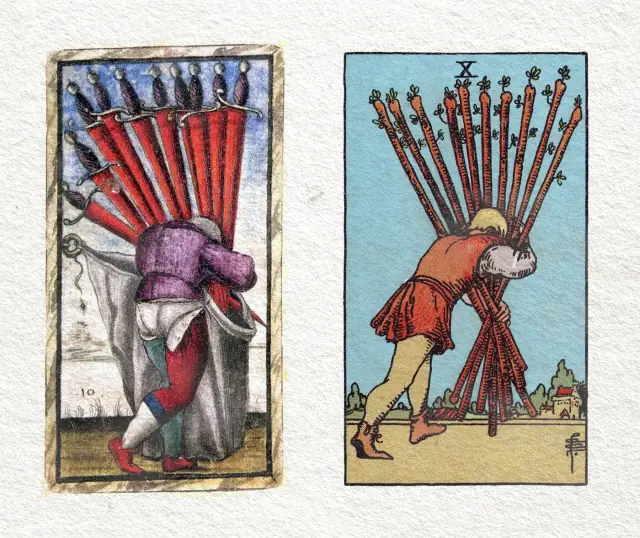
Two members of the Golden Dawn made the deck that defines tarot today. In 1909 Arthur Edward Waite commissioned the artist Pamela Colman Smith to draw 78 cards, published by William Rider & Son in London. Smith gave every numbered card a scene with people in it, something almost no deck had done since the Sola Busca, and she knew that deck, most likely from the photographs of it given to the British Museum in 1907: her Ten of Wands follows the Sola Busca Ten of Swords.[4]
A second Golden Dawn heir, Aleister Crowley, designed the Thoth tarot with the painter Frieda Harris between 1938 and 1943; it was printed in 1969. In 1971 the American publisher U.S. Games Systems reissued the Rider–Waite–Smith, and the deck began its rise to the most used tarot in the world.[7]
Since the 1970s thousands of new decks have appeared, and tarot moved from occult lodges to bookshops and phones. Its use has widened too: today tarot is read for guidance, for reflection and as a daily practice, and that is how we read it at Pulp. See Daily tarot practice.
Timeline
- 1370s: playing cards reach Europe from the Mamluk world.
- c. 1418–1425: Marziano da Tortona designs a deck of gods for Filippo Maria Visconti.
- 1440: first record of trionfi, Florence.
- 1442: trionfi painted for the Este court, Ferrara.
- Mid-15th century: Visconti-Sforza decks.
- 1491: Sola Busca tarot, Venice.
- c. 1502–1505: the name tarocchi appears.
- c. 1650: Jean Noblet's deck, the oldest Marseille-pattern tarot that survives.
- c. 1750: first divinatory meanings, Bologna.
- 1781: Court de Gébelin's Egyptian theory.
- 1789: Etteilla's divination deck.
- 1854–1856: Éliphas Lévi links tarot and the Hebrew alphabet.
- 1888: the Golden Dawn is founded in London.
- 1909: Rider–Waite–Smith tarot.
- 1969: Thoth tarot printed.
- 1971: U.S. Games reissues the Rider–Waite–Smith.