Éliphas Lévi
People · 4 min read · updated
Éliphas Lévi was the pen name of Alphonse Louis Constant (1810–1875), a French writer who turned tarot from a card game and a fortune-teller's tool into the central key of Western occultism. In Dogme et rituel de la haute magie, published in two volumes in 1854 and 1856, he matched the 22 trumps to the 22 letters of the Hebrew alphabet and called the deck the oldest book in the world. Almost every occult tarot since, from Paris to the Golden Dawn, starts from him.
- Real name
- Alphonse Louis Constant
- Known for
- Linking tarot to the Hebrew alphabet and the Kabbalah
- Main book
- Dogme et rituel de la haute magie, 1854–1856
- In English
- Transcendental Magic, translated by A. E. Waite, 1896
- Fool placed
- Between XX and XXI, on the letter Shin
- Influenced
- Papus, Oswald Wirth, the Golden Dawn
Who was Éliphas Lévi?
Constant was born in Paris, the son of a shoemaker. A parish priest noticed the clever boy and sent him to seminary, and he was ordained a deacon in 1835. He left before becoming a priest, he later said because he had fallen in love, and spent the next fifteen years as a radical writer, a draughtsman and a teacher. One of his socialist pamphlets, La Bible de la liberté (1841), earned him eight months in prison.
Around 1850 he turned to magic, took the Hebrew-sounding name Éliphas Lévi Zahed, a rough rendering of his own first names, and became the best-known occult writer in France. He lived modestly from his books and from private pupils until his death in 1875.
What did Lévi say about tarot?
Lévi took up an idea from 1781. Antoine Court de Gébelin had claimed tarot was an Egyptian book, and an essay printed with his had linked the 22 trumps to the 22 Hebrew letters.[1] Lévi made that link the backbone of a whole system. For him tarot was the Book of Hermes, older than Moses, a set of hieroglyphs that held the in pictures, and a person locked in a prison with only a tarot could, he wrote, rebuild all human knowledge from it.[2]
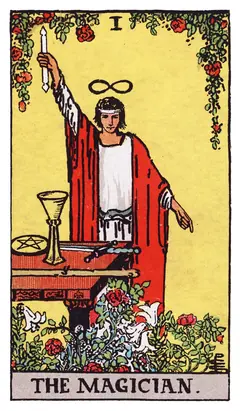
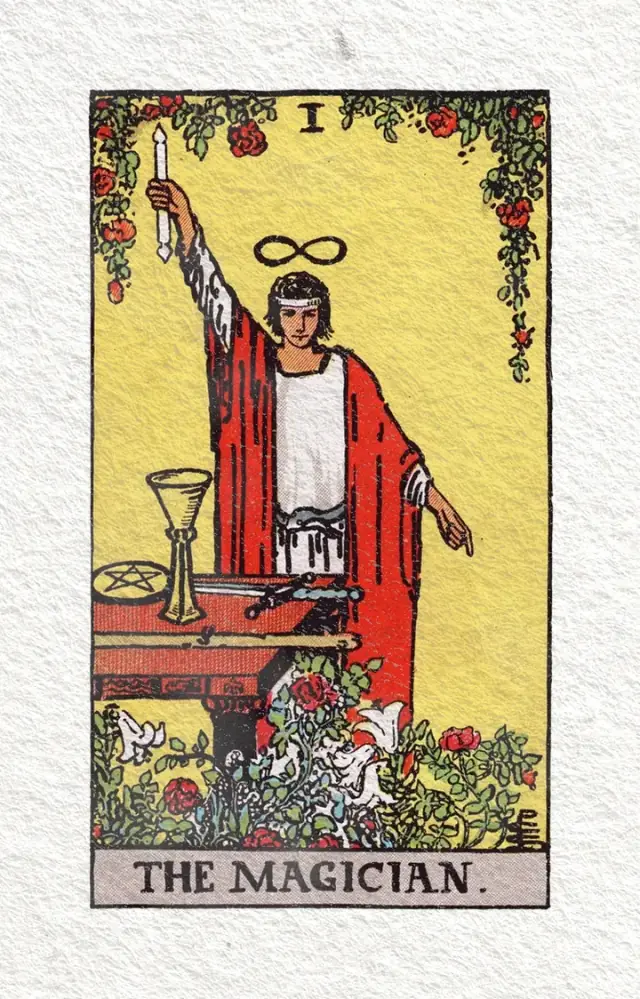
Each chapter of Dogme et rituel has 22 parts, one for each letter and trump, so the book itself is built on the cards. He gave the Magician the first letter, Aleph, and so on in order, and put the unnumbered Fool on the 21st letter, Shin, between XX and XXI.
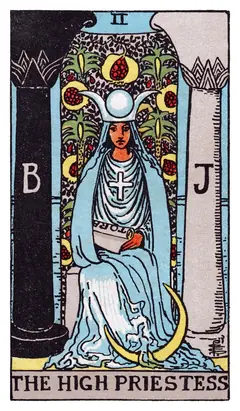
- Trumps and letters. I, the Magician, is Aleph; II, the High Priestess, Beth; and on to XXI, the World, on Tav. See .
- Suits and the divine name. The four suits stood for the four letters of the Hebrew name of God and for the four .
- Numbers. The Aces to Tens stood for the ten sephiroth of the Kabbalah. See .
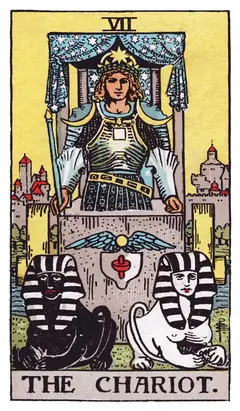
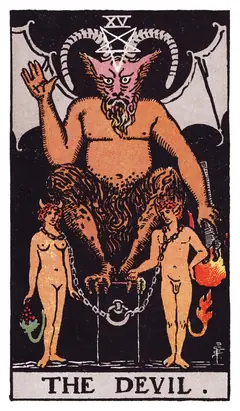
He looked down on the card readers of his day and attacked Etteilla by name for spoiling the old images. Lévi never published a full deck of his own, but he drew a few figures, including a Chariot with two sphinxes and the goat-headed Baphomet, that later artists copied onto the Chariot and the Devil.
How did Lévi shape modern tarot?
His influence came in two streams. In France, Papus and Oswald Wirth kept his order of letters and built the occult tarot of the 1880s and 1890s on it.[3] In England, the founders of the Golden Dawn read him closely, then moved the Fool to the front, on Aleph, and shifted every trump by one letter. That second order is the one behind the Rider–Waite–Smith and the Thoth, so most English readers use a system descended from Lévi without his own numbering.
He also gave occult tarot its tone: the sense that the cards hide one secret doctrine behind all religions, and that a reader is decoding it. A. E. Waite translated Dogme et rituel as Transcendental Magic in 1896, and the young Aleister Crowley liked to say he was Lévi reborn, since he was born a few months after Lévi died.
Was Lévi right about tarot?
No. Tarot began as a card game in 15th-century Italy, and its trumps show Christian virtues, planets and figures from courtly life, not Egyptian or Hebrew secrets.[1] The links to the Hebrew letters were made in the 18th and 19th centuries. That does not make Lévi's system useless; it is a way of reading the cards that many people find rich. But it is his, not the cards' original meaning. See Myths about tarot's origins and Tarot and the Kabbalah.
Lévi's main books
- Dogme et rituel de la haute magie, 1854–1856. In English as Transcendental Magic, 1896.
- Histoire de la magie, 1860. The History of Magic.
- La Clef des grands mystères, 1861. The Key of the Mysteries.