Tarot and the Kabbalah
Symbols and systems · 4 min read · updated
Tarot and the Kabbalah were joined by occultists, not by the people who made the cards. The 22 trumps were first matched to the 22 letters of the Hebrew alphabet in 1781, Éliphas Lévi turned the match into a system in the 1850s, and the Golden Dawn set each trump on one of the 22 paths of the Tree of Life. The result is the backbone of most esoteric tarot today, including the Rider–Waite–Smith and the Thoth, but it is a 19th-century overlay on a 15th-century game.
- First linked
- 1781, the Comte de Mellet
- Made a system
- Éliphas Lévi, 1854–1856
- Tree of Life version
- Trumps
- 22 Hebrew letters, 22 paths
- Aces to Tens
- The ten sephiroth
- Suits
- The four letters of the divine name
What is the Kabbalah?
The is a Jewish mystical tradition that took shape in 12th- and 13th-century Spain and Provence. Two of its ideas matter for tarot. The first, from the early Sefer Yetzirah, the Book of Creation, is that God made the world through the 22 letters of the Hebrew alphabet and the ten numbers, which it divides into three 'mother' letters, seven 'double' and twelve 'simple' ones. The second is the , a diagram of ten spheres, the sephiroth, joined by 22 paths.
Renaissance Christian scholars adapted Kabbalah, and Western occultists later built their own version of it, usually spelled Qabalah. Jewish Kabbalah has no tarot in it, and tarot has no Jewish origin.[1]
How were tarot and the Hebrew letters linked?
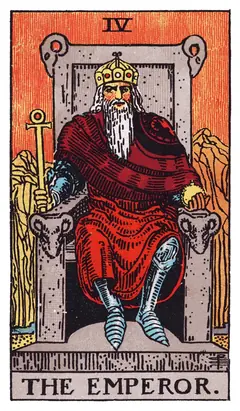
The coincidence of 22 trumps and 22 letters was first pointed out in 1781 by the Comte de Mellet, in an essay printed by Antoine Court de Gébelin.[1] Éliphas Lévi made it a system in Dogme et rituel de la haute magie (1854–1856): the Magician took Aleph, the first letter, and the unnumbered Fool went to Shin, the 21st, between XX and XXI.
The Golden Dawn, founded in London in 1888, kept the idea but moved the Fool to the front. With the Fool as 0 on Aleph, every trump shifts one letter along. The order also fixed each trump's astrology, through the Sefer Yetzirah: the three mother letters gave three elements, the seven doubles the seven classical planets, and the twelve simples the twelve signs.[2]
- Lévi and the French school: I Magician = Aleph, II High Priestess = Beth … 0 Fool = Shin, XXI World = Tav.
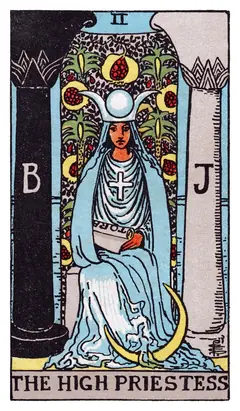
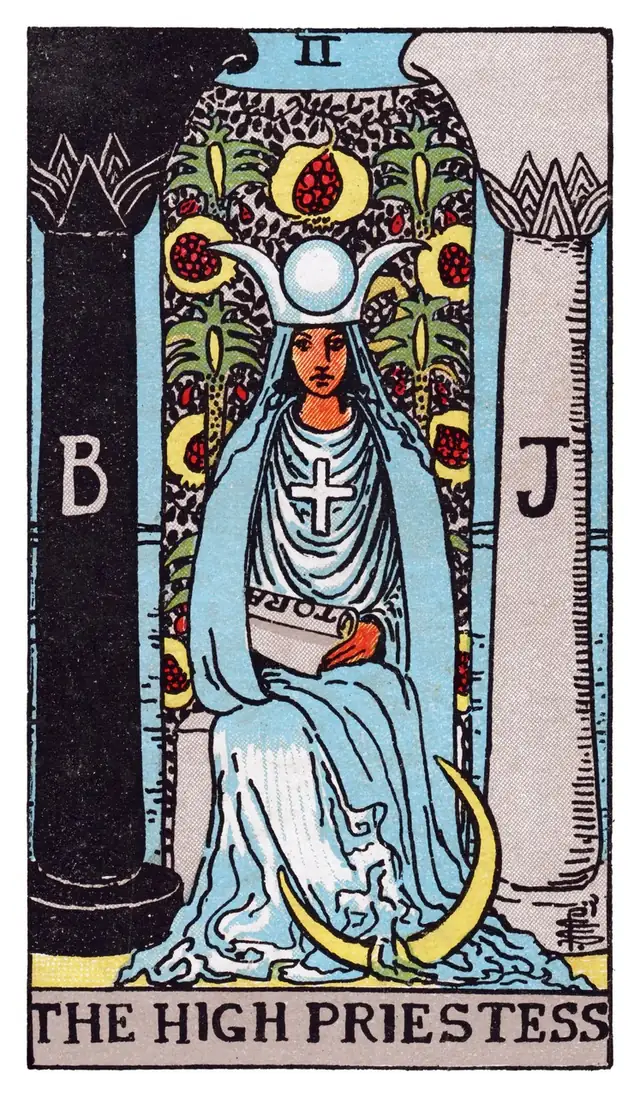
- Golden Dawn and the English school: 0 Fool = Aleph (air), I Magician = Beth (Mercury), II High Priestess = Gimel (Moon) … XXI World = Tav (Saturn).
The English order is the one most readers meet, because it sits behind the Rider–Waite–Smith and the Thoth. See .
Where does tarot go on the Tree of Life?
In the Golden Dawn's scheme the whole deck maps onto the Tree:
- The 22 trumps are the 22 paths, each joining two spheres. The High Priestess, for example, runs down the middle from the top sphere to the sixth.
- The Aces to Tens sit on the ten spheres by number, the four Aces on the first, the four Tens on the last.
- The court cards stand for the four letters of the divine name, YHVH, and with them the four elements and four 'worlds' of the Kabbalah.
Reading the Tree this way, a trump describes a passage between two states, and the numbered cards describe the states themselves. Some readers use this to study the cards; few use it in an ordinary reading.
Why do the Strength–Justice swap and the Emperor–Star swap exist?
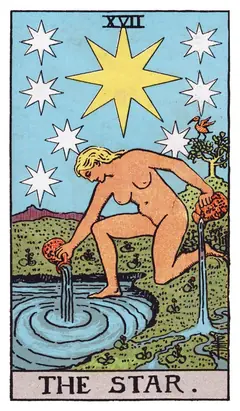
Both are Kabbalistic fixes. The Golden Dawn found that, with the Fool on Aleph, the zodiac signs fell out of order unless Strength (Leo) and Justice (Libra) traded places, so it made Strength VIII and Justice XI. Waite printed that change in 1909. Crowley went further and swapped the letters of the Emperor and the Star, after a line in his Book of the Law. See The order of the Major Arcana.
Do you need the Kabbalah to read tarot?
No. The cards were designed in 15th-century Italy as a game, and every image can be read on its own. Kabbalah gives some readers a frame that connects all 78 cards and links tarot to astrology and magic, and if that appeals, the Tree is a rich place to study. If it does not, nothing is missing from a reading without it. See Occult tarot for the full story of how the link was made, and Myths about tarot's origins for why it is not historical.