Tarot and astrology
Symbols and systems · 3 min read · updated
Tarot and astrology are linked by a table of correspondences: each zodiac sign is given one Major Arcana card and three numbered Minor cards, and each classical planet one trump. Almost every modern deck uses the version set down by the Hermetic Order of the Golden Dawn in the 1880s.
- System
- Major Arcana
- 12 signs, 7 planets, 3 elements
- Pips Two to Ten
- Aces
- Elements, not signs
- Earlier scheme
- Etteilla, 1780s, different cards
- Thoth deck
- Same signs, two Hebrew letters swapped
How are tarot and astrology connected?
Not by history. The cards were invented in 15th-century Italy for a game, and nothing on them was designed around the zodiac. The link was made by occultists. The French cartomancer Etteilla gave cards astrological meanings in the 1780s, with assignments that no one uses now.[1] The system that stuck is the Golden Dawn's, written in its manuscript and later published by Aleister Crowley in 1912.[2][3]
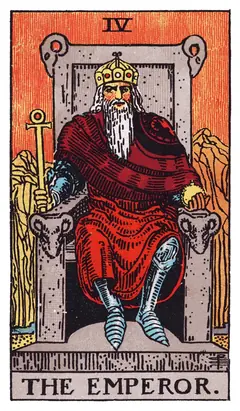
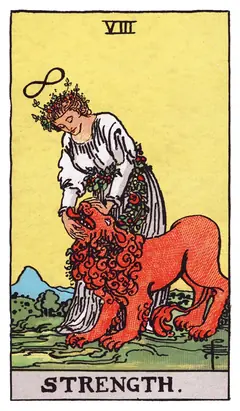
Pamela Colman Smith and A. E. Waite were both members of the Golden Dawn, and the Rider–Waite–Smith deck shows it: the Emperor's throne carries rams' heads for Aries, and Waite swapped Strength and Justice, which puts Leo before Libra in the sequence, as the Golden Dawn's scheme requires.[4]
Which tarot card is my zodiac sign?
Each sign has one Major Arcana card and three pip cards, one for each ten-degree of the sign. The pips follow the sign's element, and the numbers follow its place in the season: cardinal signs take Two to Four, fixed signs Five to Seven, mutable signs Eight to Ten.
- Aries (fire): The Emperor; Two, Three and Four of Wands
- Taurus (earth): The Hierophant; Five, Six and Seven of Pentacles
- Gemini (air): The Lovers; Eight, Nine and Ten of Swords
- Cancer (water): The Chariot; Two, Three and Four of Cups
- Leo (fire): Strength; Five, Six and Seven of Wands
- Virgo (earth): The Hermit; Eight, Nine and Ten of Pentacles
- Libra (air): Justice; Two, Three and Four of Swords
- Scorpio (water): Death; Five, Six and Seven of Cups
- Sagittarius (fire): Temperance; Eight, Nine and Ten of Wands
- Capricorn (earth): The Devil; Two, Three and Four of Pentacles
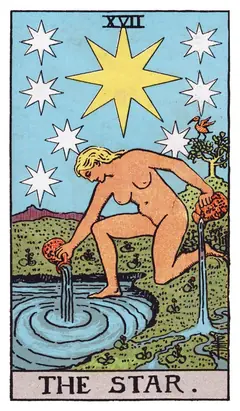
- Aquarius (air): The Star; Five, Six and Seven of Swords
- Pisces (water): The Moon; Eight, Nine and Ten of Cups
The Major for your sun sign is the card most books mean by your zodiac tarot card. It is a symbolic pairing, not a personality reading: the cards themselves say nothing about birth charts.
Which tarot cards are the planets?
The seven planets of classical astrology each have a trump:
- Mercury: The Magician
- Moon: The High Priestess
- Venus: The Empress
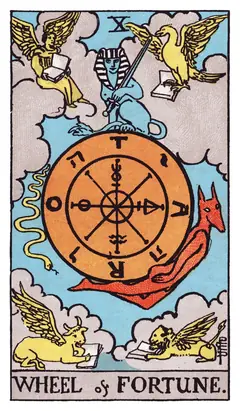
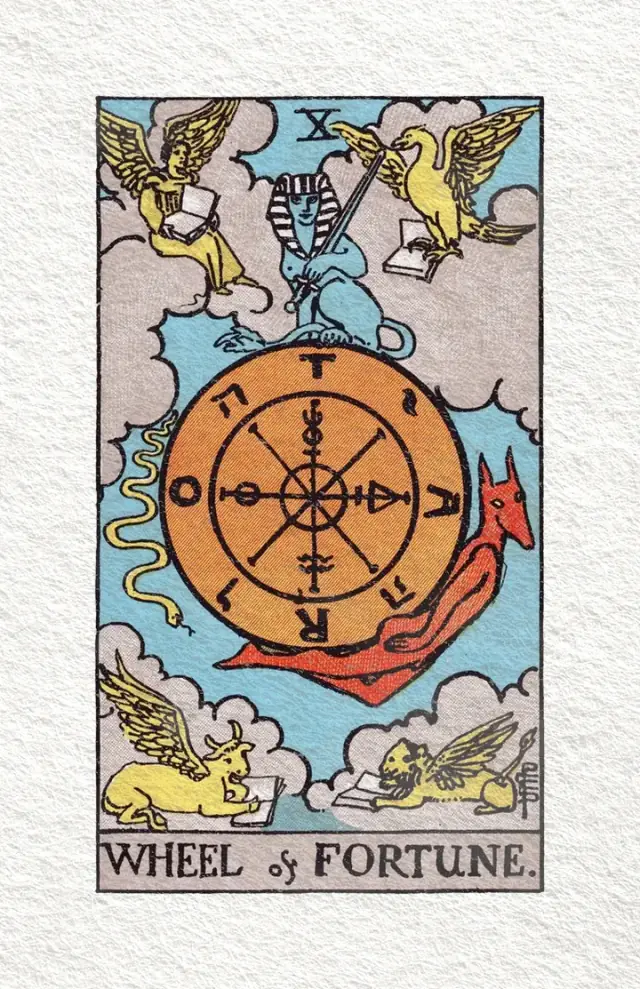
- Jupiter: Wheel of Fortune
- Mars: The Tower
- Sun: The Sun
- Saturn: The World
The last three trumps go to the elements: the Fool to air, the Hanged Man to water and Judgement to fire. Earth, with no card of its own, is often shared with the World. Some modern books give the Fool to Uranus, the Hanged Man to Neptune and Judgement to Pluto, planets discovered long after the cards; that is a later addition, not the Golden Dawn scheme.
Each decan is also ruled by a planet, so every pip from Two to Ten carries a planet in a sign. The Golden Dawn started the count at the first decan of Leo, with the Five of Wands, and ran the planets in the old Chaldean order.[2]
What about Aces and court cards?
The four Aces are not given a sign. Each stands for its whole element, the root of the suit: the Ace of Wands for fire, and so on. The Golden Dawn gave each a span of the zodiac running from the last decan of one sign to the second decan of the next, with the Pages each ruling a quarter of the heavens. Most readers today use only the courts' elements. See Tarot elements.
In the Thoth tarot Aleister Crowley kept the same signs but swapped the Hebrew letters of the Emperor and the Star, and renamed Strength and Justice as Lust and Adjustment.[5]
How to use astrology in a tarot reading
- As an extra layer: a card's sign or planet can suggest a mood or a theme to look into.
- For timing: some readers take the dates of a card's decan as a possible time frame.
- For a : pick the Major of a person's sun sign to stand for them.
- For study: reading the table side by side with a birth chart is a way to learn both systems.
All of it is optional. Many readers never use astrology in tarot, and the cards work as pictures without it.