Tarot elements
Symbols and systems · 4 min read · updated
The four tarot elements are fire, water, air and earth. Wands are fire, Cups water, Swords air and Pentacles earth, and every Major Arcana and court card has an element too. Elemental dignities is the method of reading how neighbouring cards strengthen or weaken each other through their elements.
- Fire
- Wands · drive, will, action
- Water
- Cups · feeling, intuition, bonds
- Air
- Swords · thought, words, conflict
- Earth
- Pentacles · body, money, the practical
- Elements fixed by
- The Golden Dawn, 1880s
- Dignities from
What are the four elements in tarot?
The four are an idea from ancient Greece: everything is made of fire, water, air and earth in different mixtures. Renaissance thinkers kept the idea alive, and 19th-century occultists laid it over the four of tarot. The Golden Dawn fixed the version most decks follow today.[1]
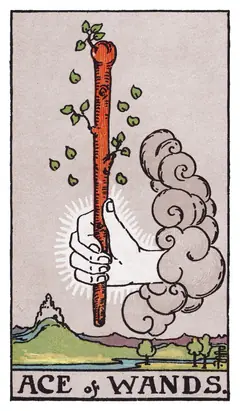
- Fire (): energy, will, ambition, creativity, the spark that starts things. Hot and quick.
- Water (Cups): feeling, love, intuition, dreams. It flows, reflects and takes the shape of what holds it.
- Air (Swords): thought, speech, truth, decisions, conflict. Fast, sharp and hard to hold.
- Earth (Pentacles): the body, money, work, home, nature. Slow, solid and lasting.
Some decks and teachers swap Wands and Swords, giving fire to Swords and air to Wands. Both systems are in print; choose one and keep to it. See Tarot suits.
What element are the Major Arcana?
The trumps get their elements through astrology. A card linked to a sign takes that sign's element; a card linked to a planet takes the element of the sign the planet rules, or the reader treats it as mixed. Three trumps are elements in their own right: the Fool is air, the Hanged Man water and Judgement fire.
- Fire: the Emperor, Strength, Temperance, Judgement
- Water: the Chariot, Death, the Moon, the Hanged Man
- Air: the Lovers, Justice, the Star, the Fool
- Earth: the Hierophant, the Hermit, the Devil
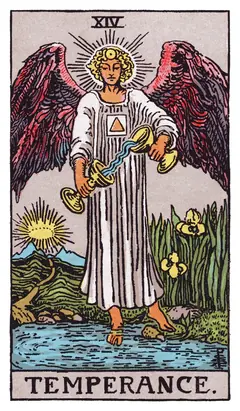
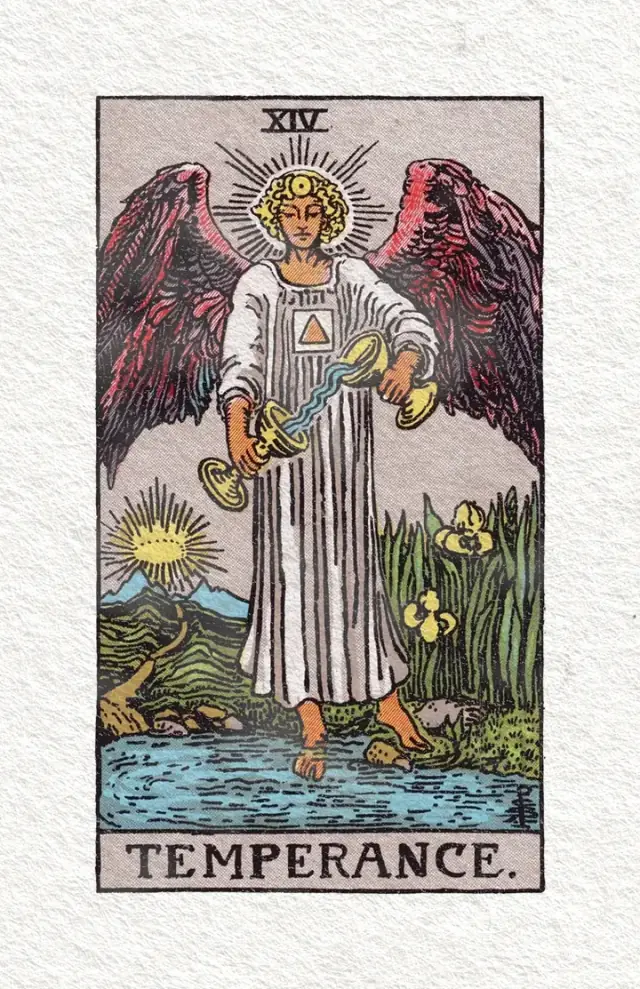
The Temperance angel, pouring water with one foot on land and fire on her robe, is often read as the elements brought into balance. For the full table of signs and planets, see Tarot and astrology.
What element are the court cards?
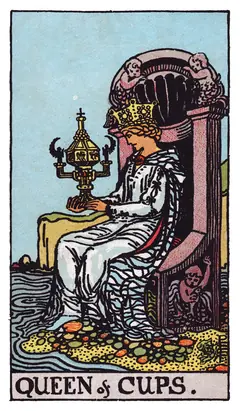
Each has two elements: its suit's, and its rank's. In the Golden Dawn system the Knight is fire, the Queen water, the King air and the Page earth, so the Queen of Cups is water of water, the purest form of her suit. Many modern books instead make the Kings fire and the Knights air. The difference comes from how the Golden Dawn's four ranks, King, Queen, Prince and Princess, were matched to the Rider–Waite–Smith names, a muddle known as the problem. See Court cards.
What are elemental dignities?
is a way to read cards by their neighbours instead of by whether they are upright or reversed. It comes from Book T, the Golden Dawn's tarot manual of about 1888, which says that a card is made strong or weak by the cards on either side of it.[2] A well-dignified card shows its qualities fully; an ill-dignified one is weakened, or shows its harder side.
The rules, as Book T gives them:
- Same element: strongly supportive. Two Cups cards beside a third Cups card make it very strong.
- Opposite elements: fire against water, air against earth. They weaken each other.
- The other pairs: fire with air or earth, water with air or earth. Friendly, they support each other.
- A card between two enemies: if the cards on either side are opposed to each other, they cancel out and the middle card is barely touched by either.
The logic is the old Greek one. Each element has two of four qualities: fire is hot and dry, air hot and wet, water cold and wet, earth cold and dry. Elements that share a quality get on; opposites share nothing. Many modern teachers make fire with earth and air with water only neutral, since they share less in feeling than fire and air do. Both readings are in use.
How to read elemental dignities in a spread
- Lay the cards in a row, or read a larger in groups of three.
- Name the element of every card, Majors and courts included.
- For each card, look at the cards either side and decide whether they support, weaken or cancel each other.
- Give the strongest cards the most weight, and read weak cards as muted, late or blocked.
- Note the balance of the whole spread. A reading with no earth may be all plans and no ground; one heavy with water may be about feelings whatever the question says.
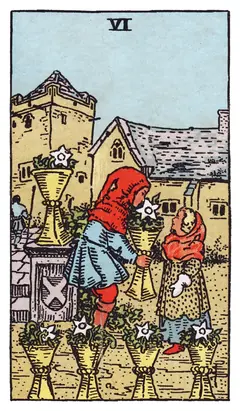
An example: the Six of Cups between the Ace of Wands and the Knight of Wands is ill-dignified, water flanked by fire, and its warmth reads as weakened. Put it between two Pentacles cards and it is well supported. Readers who use dignities often drop , since the neighbours already do that work. See Reversed tarot cards.