Tarot suits
Tarot basics · 2 min read · updated
Tarot has four suits of 14 cards: Wands (energy, drive, work), Cups (feelings and relationships), Swords (thought, words and conflict) and Pentacles (money, body and everyday matter). Most modern decks link them to fire, water, air and earth.
- Wands
- Fire · Clubs · energy, plans, work
- Cups
- Water · Hearts · feelings, love, bonds
- Swords
- Air · Spades · mind, words, conflict
- Pentacles
- Earth · Diamonds · money, body, home
- Cards per suit
- 14: Ace–Ten, Page, Knight, Queen, King
- Elements from
- 19th-century occultism, Golden Dawn
The four suits
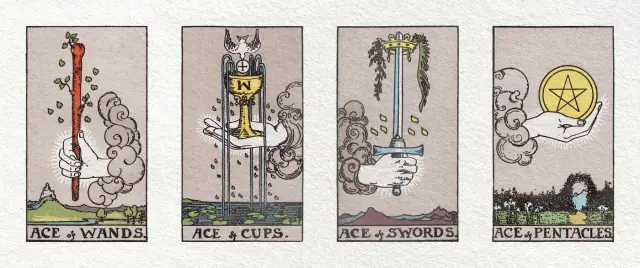
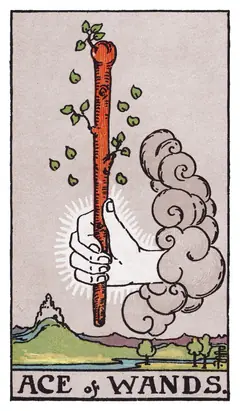
- Wands (also Batons, Staves, Rods). Fire. Energy, ambition, work, creativity, the urge to start. Begins with the Ace of Wands.
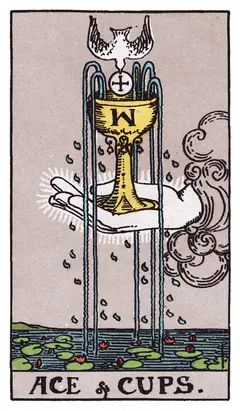
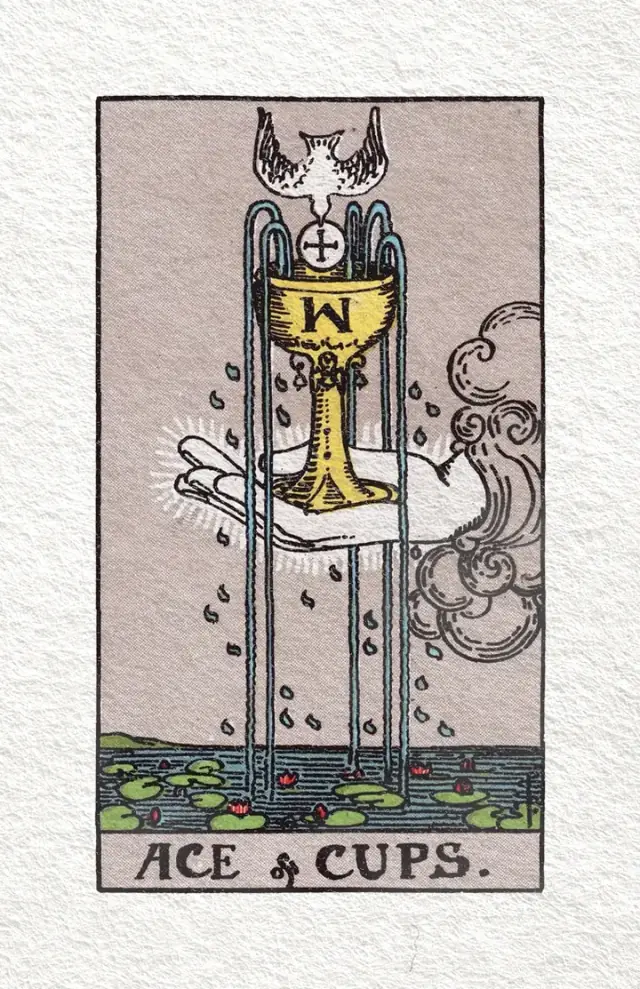
- Cups (Chalices). Water. Feelings, love, friendship, intuition, what you long for. Begins with the Ace of Cups.
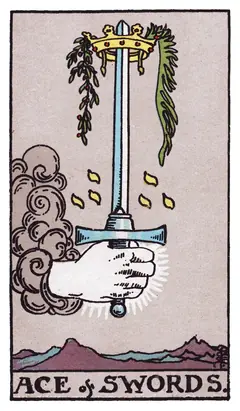
- Swords (Blades). Air. Thought, truth, words, decisions, conflict and its pain. Begins with the Ace of Swords.
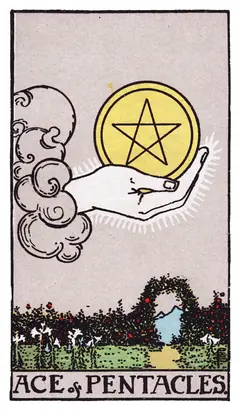
- Pentacles (Coins, Disks). Earth. Money, work done with the hands, the body, home, what grows slowly. Begins with the Ace of Pentacles.
Each suit has an Ace, the numbers Two to Ten and four court cards. The numbers follow the same arc in every suit, from a seed in the Ace to a full, sometimes heavy, Ten. See Numbers in tarot.
Where the suits come from
Tarot's suits are older than tarot. Playing cards reached Europe in the 1370s from the Mamluk world with four suits: cups, coins, swords and polo sticks.[1] Italians turned polo sticks into batons, and those four Italian suits became the suits of tarot when were added around 1440.[1]
French card-makers later simplified the signs into clubs, hearts, spades and diamonds. So tarot and an ordinary 52-card pack are cousins:
- Wands: Clubs
- Cups: Hearts
- Swords: Spades
- Pentacles: Diamonds
The name Pentacles, a coin with a five-pointed star, is an occult renaming from the 19th century; older decks simply have coins.[2]
Suits and elements
The link between suits and the four elements was set by occultists in the 19th century and fixed by the Golden Dawn: Wands fire, Cups water, Swords air, Pentacles earth.[2] Most modern books follow it. Some traditions swap Wands and Swords, giving Swords to fire; both systems exist, and a reader picks one. See Tarot elements.
Reading suits in a spread
The mix of suits is a quick first read:
- Many Cups: the question is really about feelings, whatever it says on the surface.
- Many Swords: overthinking, a hard conversation, or a decision that needs clarity.
- Many Wands: momentum, plans, maybe too much on the go.
- Many Pentacles: money, health, routine, practical steps.
- One suit missing: an area you may be leaving out.