Major and Minor Arcana
Tarot basics · 2 min read · updated
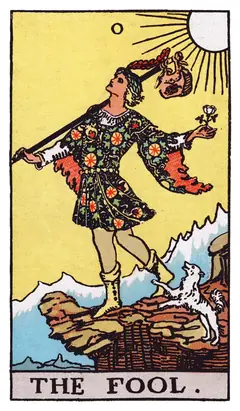
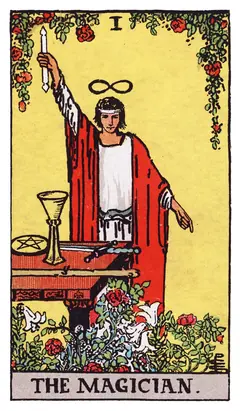
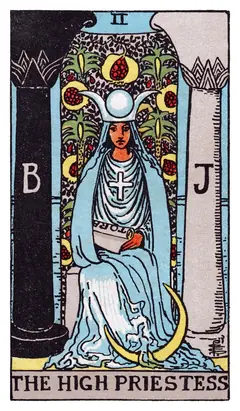
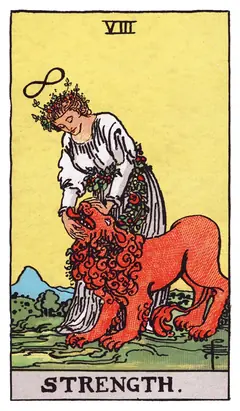
A tarot deck has two parts. The Major Arcana are 22 named picture cards, numbered 0 to 21, that read as big themes and turning points. The Minor Arcana are 56 cards in four suits that read as everyday situations, moods and actions.
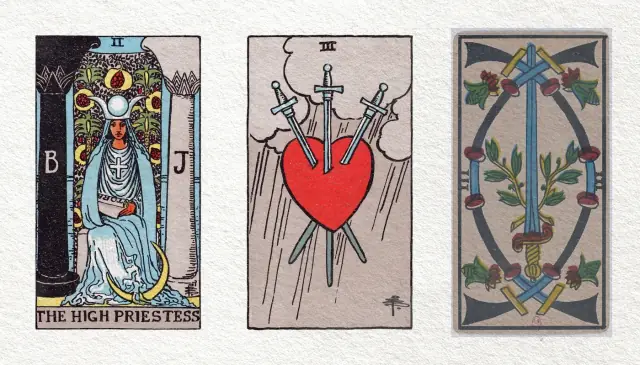
- Major Arcana
- 22 cards, 0 The Fool to XXI The World
- Minor Arcana
- 56 cards: 4 suits × (Ace–Ten + 4 courts)
- Old names
- Trumps (trionfi) and suit cards
- Term "arcana"
- 19th-century French occultism
- In a reading
- Majors: big themes; Minors: daily life
Two parts of one deck
The Major Arcana began as the trumps of a card game. In the 15th century they were called trionfi, triumphs: picture cards that beat every suit card.[1] The Minor Arcana are the four ordinary suits, the same family as a modern pack of playing cards.
The words "Major Arcana" and "Minor Arcana", "greater and lesser secrets", come from French occult writers of the 19th century, who believed the trumps hid an ancient doctrine.[2] The names stuck; the doctrine is not historical. See History of tarot.
The Major Arcana
The 22 cards, in Rider–Waite–Smith order:
0 The Fool · I The Magician · II The High Priestess · III The Empress · IV The Emperor · V The Hierophant · VI The Lovers · VII The Chariot · VIII Strength · IX The Hermit · X Wheel of Fortune · XI Justice · XII The Hanged Man · XIII Death · XIV Temperance · XV The Devil · XVI The Tower · XVII The Star · XVIII The Moon · XIX The Sun · XX Judgement · XXI The World
Every one has its own page in the card library, starting with The Fool and ending with The World.
In a reading a Major Arcana card points to something larger than a passing mood: a theme, a lesson, a turn. A spread full of Majors is often read as a period of big change. Many readers also read the sequence as a story, the Fool's journey from 0 to XXI. See The Fool's journey.
Why Strength and Justice swap
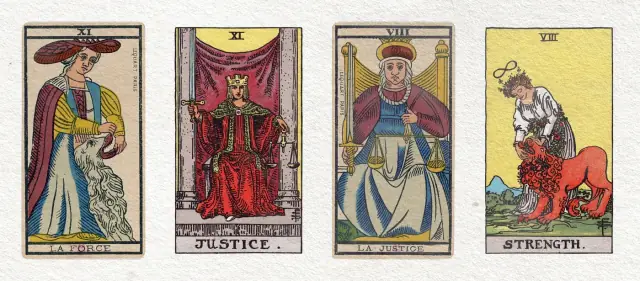
Older decks, including the Tarot de Marseille, put Justice at VIII and Strength at XI. The Golden Dawn swapped them so that the cards would fit its astrological table, Leo for Strength and Libra for Justice, and Waite printed the new order in 1909.[3] Decks in the Marseille tradition keep the old order, so both numberings are correct. More in Why Strength is 8 and Justice 11.
The Minor Arcana
56 cards, four suits of 14:
- Ace to Ten, the numbered cards (also called pips).
- Page, Knight, Queen and King, the court cards.
The suits are Wands, Cups, Swords and Pentacles, each tied to an area of life and an element. See Tarot suits. The numbers carry meaning too: Aces begin, Fives disturb, Tens complete. See Numbers in tarot.
In older decks the numbered cards show only arranged suit signs, as on a playing card. The Rider–Waite–Smith gave each one a scene, which is why its Minors are easier to read from the picture alone: compare the two Three of Swords cards above.
How to read them together
A simple rule many readers use: Majors set the theme, Minors show where and how it plays out. One Major among Minors is the headline of the reading. Many Minors and no Majors suggest everyday matters that are in your hands.