What is tarot?
Tarot basics · 3 min read · updated
Tarot is a deck of 78 cards: 22 picture cards called the Major Arcana and 56 suit cards called the Minor Arcana. It was invented in northern Italy around 1440 for a card game, and since the late 18th century it has also been read as a tool of divination and reflection.
- Cards
- 78
- Major Arcana
- 22 trumps, numbered 0 to 21
- Minor Arcana
- 56 cards in four suits
- Suits
- Wands, Cups, Swords, Pentacles
- First recorded
- Florence, 1440
- Used for reading since
- c. 1750 (Bologna), widely from the 1780s (Paris)
- Best-known deck
- Rider–Waite–Smith, 1909
The deck
A standard tarot deck has 78 cards in two parts.
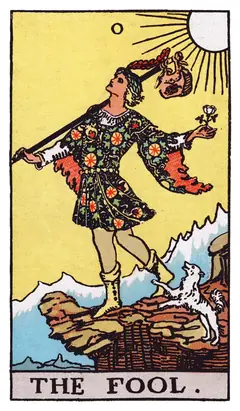
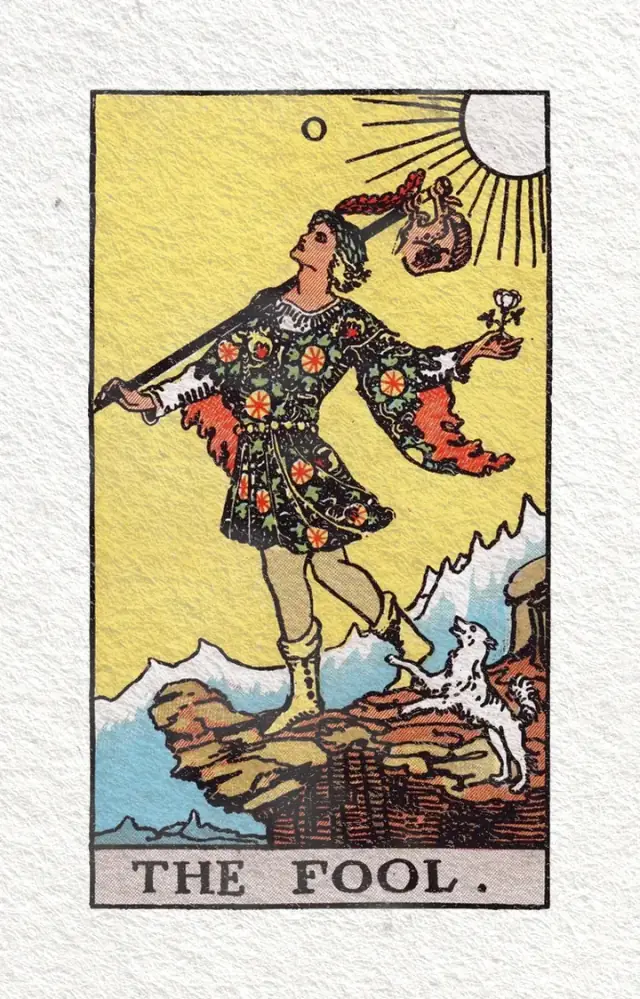
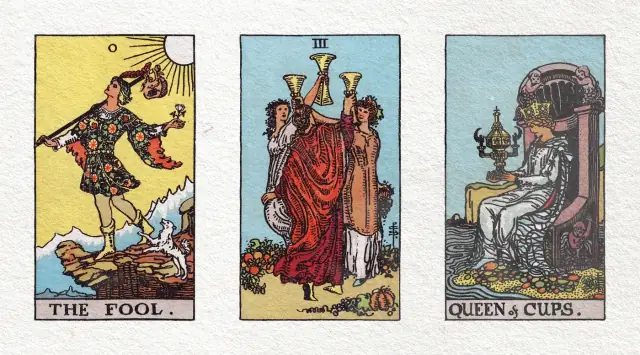
- The Major Arcana, 22 cards with names and pictures: The Fool, The Magician, Death, The World and the rest. In the card game they were the trumps, and most decks still number them 0 to 21.
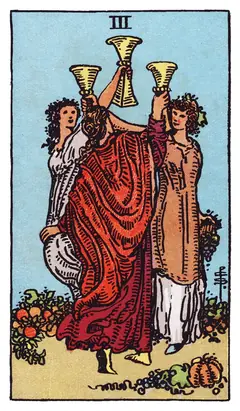
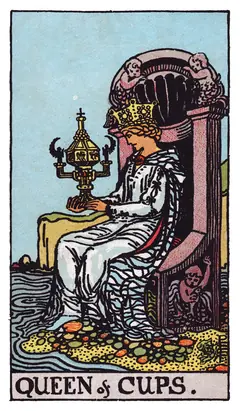
- The Minor Arcana, 56 cards in four suits of 14: Ace to Ten, then four court cards, the Page, Knight, Queen and King.
The four suits are Wands, Cups, Swords and Pentacles. Older Italian and French decks call them Batons, Cups, Swords and Coins. An ordinary 52-card pack comes from the same family: Clubs, Hearts, Spades and Diamonds are later French versions of the same four suits, with one (the Knight) and all the trumps taken out.[1]
The words "Major Arcana" and "Minor Arcana" ("great secrets", "lesser secrets") are not historical. They come from French occult writers of the 19th century and were never printed on the old cards.[2] More on that in Major and Minor Arcana.
Where tarot comes from
Tarot was invented in the courts of northern Italy in the first half of the 15th century. The earliest firm record is from Florence in 1440, when a notary noted in his diary that he had given a nobleman a pack of trionfi, "triumphs", the first name of the cards.[3] The account books of the Este court in Ferrara mention painted trionfi in 1442.[1]
For more than three hundred years tarot was simply a card game, played with tricks and trumps much like bridge. It still is: is one of the most played card games in France, and Tarock games are alive in Austria, Hungary and Slovenia.[1] The story of how a game became an oracle is told in History of tarot.
Tarot for reading
The earliest known use of tarot cards for fortune-telling is a sheet from Bologna, written around 1750, that gives short meanings for 35 cards: "journey", "betrayal", "love".[2] Cartomancy with tarot became a trade in Paris in the 1780s, led by a card reader who called himself Etteilla.
In 1781 the writer Antoine Court de Gébelin claimed that tarot was a lost book of ancient Egyptian wisdom. There is no evidence for this, and the cards are Italian Renaissance designs, but the idea shaped how occultists read tarot for the next century.[2] See Myths about tarot's origins.
Most modern readers use one of three traditions:
- Rider–Waite–Smith (1909), where every numbered card has a scene. It is the default deck in the English-speaking world.
- Tarot de Marseille, the older French pattern, where numbered cards show only arranged suit symbols.
- Thoth (painted 1938–1943, printed 1969), designed by Aleister Crowley and Frieda Harris.
How a reading works
A reading usually follows the same steps, whatever the deck:
- Ask a question, or set a theme for the day.
- Shuffle and draw cards.
- Lay them out in a spread, where each position has a role: past, present, obstacle, advice.
- Read each card from its picture and its traditional meaning, then read the cards together.
Some readers also read reversed cards, drawn upside down, as a weaker or blocked version of the meaning. A one-card draw is the simplest practice and a common way to start. See How to read tarot.
What a reading gives you
A reading answers in pictures. You bring a question, draw the cards and read them against centuries of meanings; the cards show your situation from a side you had not looked at, and often name what you already sensed but had not said.[4]
Tarot is read more widely now than at any time in its history. In a Pew Research Center survey published in 2025, 30% of American adults said they consult astrology, tarot cards or a fortune teller at least once a year; 11% consult tarot cards specifically.[5] For many readers, and for us, it is a daily practice: one card in the morning, a spread for a bigger question, and a journal to see how the readings unfold. See Daily tarot practice.
Tarot and oracle cards
Oracle decks look similar but have no fixed structure: any number of cards, any themes, no suits. Tarot always has the same 78-card skeleton, so a card means broadly the same thing from deck to deck. See Tarot vs oracle cards.