How to read tarot
Reading tarot · 3 min read · updated
To read tarot, you ask a question, shuffle, lay out a few cards in a spread and read each card from its picture and its traditional meaning, then read the cards together as one story. You do not need a gift or a ritual; you need a deck, a question and some practice.
- You need
- A deck, a question, a quiet place
- First deck
- Rider–Waite–Smith or a deck based on it
- Simplest spread
- One card
- Classic spread
- Three cards
- Time
- 5 to 20 minutes
What you need
A deck of 78 cards, a question and ten quiet minutes. Most beginners start with the Rider–Waite–Smith deck or one based on it, because every card shows a scene you can read even before you learn its meaning. See How to choose a tarot deck.
You do not need to be given your first deck, to be psychic, or to cleanse anything first. Those are customs, not rules, and tarot has no central authority that sets rules. See How to cleanse tarot cards.
Step 1: ask a question
A good question is open and about you. "What do I need to understand about this job offer?" works better than "Will I get the job?", because the cards describe situations and attitudes much better than they give yes-or-no forecasts. See How to ask tarot a question.
Step 2: shuffle and draw
Shuffle in any way that mixes the cards: overhand, riffle, or spread them face down on the table and stir. Stop when it feels done, cut the deck if you like, and draw from the top or pick cards from a fan. If you read reversed cards, keep the cards that come out upside down as they are. See How to shuffle tarot cards.
Step 3: choose a spread
A spread gives each card a job. Start small:
- One card: the theme of the day or the heart of the question.
- Three cards: past, present, next; or situation, obstacle, advice.
- Ten cards: the , which Waite printed in 1911 and which is still the best-known long spread.[1]
More spreads are in the spreads section.
Step 4: read each card
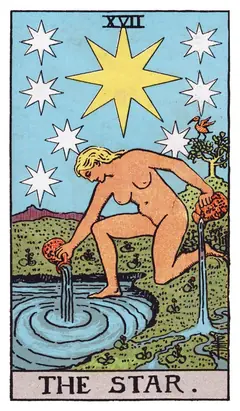
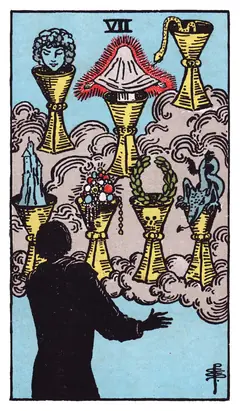
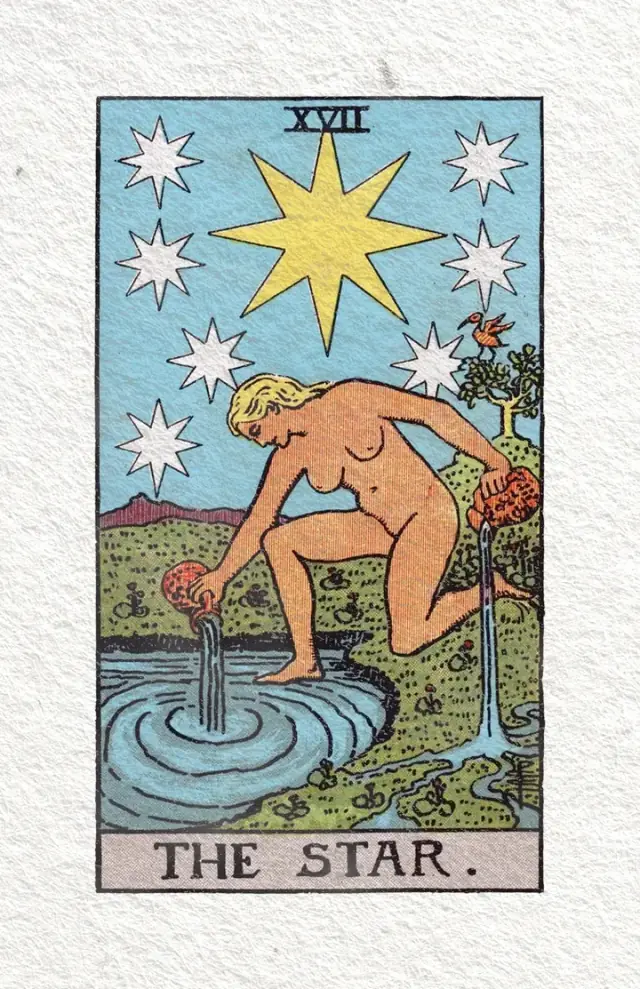
Look before you look anything up. Say what you see: who is in the picture, what they are doing, the weather, the colours. Then add the card's traditional meaning, which you can read on its card page, for example The Star or Seven of Cups.
A useful order of questions for each card:
- What is happening in the picture?
- What is the card's usual meaning?
- What does its position in the spread ask?
- Where is this in my life right now?
Step 5: read the cards together
The reading is the story the cards tell side by side. Notice what repeats. Many cards of one suit point to one area of life: Cups to feelings, Pentacles to money and body, Swords to thinking and conflict, Wands to energy and plans. Many Major Arcana suggest a large turn rather than a passing mood. Notice which way the figures look and whether the pictures continue each other.
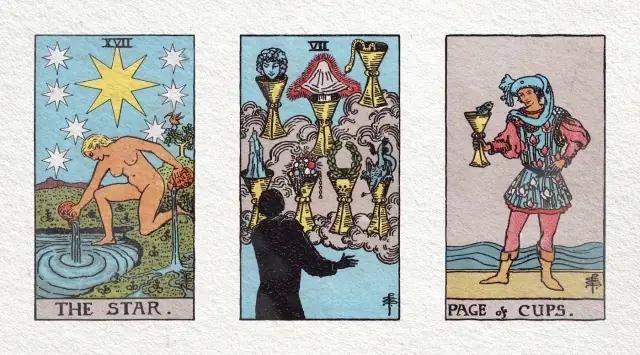
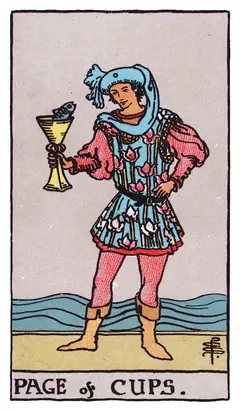
An example. For "What do I need to see about this new project?" the draw is The Star, Seven of Cups and Page of Cups. The Star says the hope behind the project is real. The Seven of Cups warns that there are too many shining options. The Page of Cups suggests picking the smallest, most heartfelt idea and starting with it, the way the page looks at one fish in one cup.
Step 6: write it down
Write the question, the cards and one sentence of what you made of them. A week later the note shows you what you saw and what you missed; over months it shows which cards keep returning. See How to keep a tarot journal.
How long until you can read?
Most people can read a one-card draw on the first day and a three-card spread within a few weeks of daily practice. Memorising all 78 meanings is not required: readers have always worked with the picture, the number and the suit as much as with a list of keywords. A card a day for a month covers most of the deck.