Reversed tarot cards
Reading tarot · 2 min read · updated
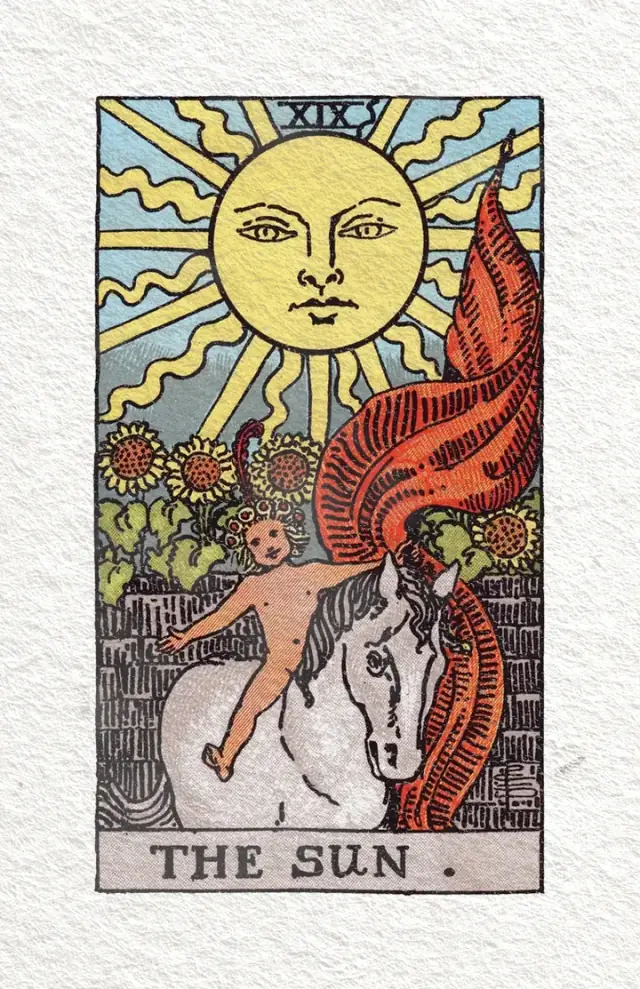
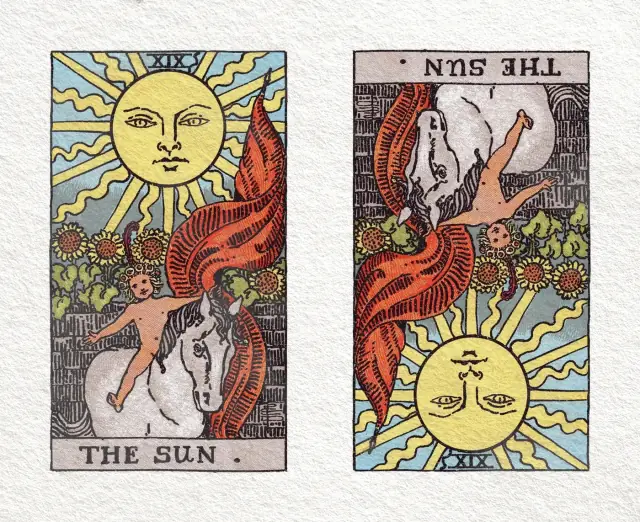
A reversed tarot card is a card that comes out upside down. Readers who use reversals usually read it as the card's meaning blocked, weakened, turned inward or delayed. Reversals are optional: many experienced readers never use them.
- Also called
- Inverted, ill-dignified
- First recorded
- Etteilla, Paris, 1780s
- In Waite's book
- A reversed meaning for every card, 1911
- Optional
- Yes
- Share of reversals
- About half, if the deck is fully mixed
What a reversal is
When you shuffle without keeping all cards the same way up, some come out upside down. A reader who uses reversals gives those cards a second meaning. A reader who does not simply turns them upright.
Where reversals come from
The old card game had no use for them; tarot cards were often symmetrical or unnumbered at the bottom. Reversed meanings appear with . The Parisian cartomancer Etteilla gave cards separate upright and reversed meanings in his books of the 1780s.[1] A. E. Waite printed a reversed meaning for each of the 78 cards in The Pictorial Key to the Tarot (1911), and most modern books follow him.[2]
Ways to read a reversed card
There is no single rule. The common approaches, collected in Mary K. Greer's book on reversals, include:[3]
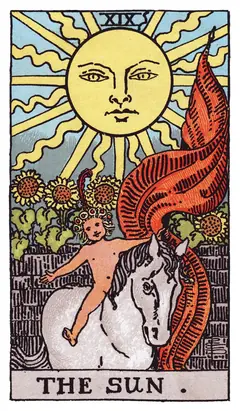
- Blocked: the energy of the card is there but cannot get out. Reversed Sun: joy you are not letting yourself feel.
- Weaker or delayed: the same meaning, smaller or later.
- Inward: the card is about your inner life rather than events.
- Excess: too much of the card's quality. Reversed Strength: control turned into strain.
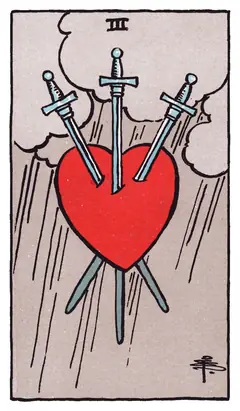
- Relief: for difficult cards, the worst is passing. Reversed Three of Swords: the hurt beginning to heal.
- The opposite: the oldest and bluntest method, now less used.
Pick one approach and keep to it for a while, so that a reversed card means something consistent in your readings.
Should you use them?
Reversals double the vocabulary: 156 meanings instead of 78. That gives nuance, and it gives more to learn. Many readers skip them and get the same nuance from position and neighbouring cards: a hard card next to supportive ones already reads as softened.
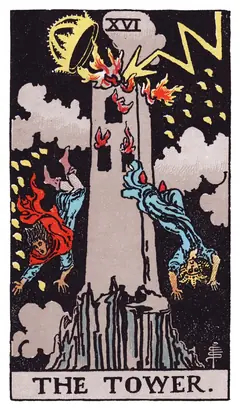
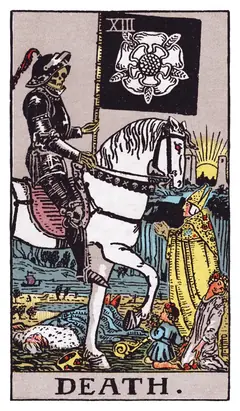
A practical middle way is to read reversals only for the Major Arcana, or only when a card comes out reversed in a deck you have kept upright. Pulp shows both meanings on every card page, for example The Tower and Death, so you can try both ways.
How to get reversals into a deck
A new deck comes all one way up. To mix in reversals, spread the cards face down on a table and stir them with both hands, or turn half the deck around before a riffle shuffle. See How to shuffle tarot cards.